Konsume
Interval Day Week Month
Author Profile Past 90 Days 82 stories 1 Publishers

mission notes

No author bio on file yet.

Social profiles not yet on file.
mission notes's Coverage
Buzz
Media Coverage
World View

Beat Reporting
Category Articles Share
Technology_Internet 57
Environment 11
Disaster_Accident 7
Business_Finance 2
Entertainment_Culture 1
Health_Medical_Pharma 1
Weather 1
Sports 1
War_Conflict 1

Opportunity’s solar panels were mysteriously getting cleaner long before the rover ever saw the suspected culprit: it did not photograph its first Martian dust devil until six and a half years after landing.

2026-09-10 — spacedaily.com


In 1958, the US Air Force commissioned a secret study of detonating a nuclear warhead on the Moon, partly so the flash and sunlit dust cloud could be seen from Earth after America’s humiliation by Sputnik. Project A119’s team included doctoral student Carl Sagan, who turned 24 that year and calculated how the debris would expand in lunar gravity—the plan was quietly abandoned in January 1959 for reasons its own project leader said were never explained to him.

2026-09-10 — spacedaily.com


LAGEOS-1, launched in 1976, has no power supply, communications equipment or moving parts: it is a 407-kilogram metal sphere covered with 426 reflectors that return laser pulses to Earth. Expected to remain in orbit for roughly 8.4 million years, it carries two copies of a plaque designed by Carl Sagan showing Earth’s continents in the distant past, at launch and at its predicted return—so whoever finds it can work out when it came from.

2026-09-10 — spacedaily.com


On June 8, 1985, cosmonauts Vladimir Dzhanibekov and Viktor Savinykh manually docked with Salyut 7, which had drifted silent and powerless for nearly four months. Inside, they worked by flashlight in winter coats and fur-lined hats, restoring the station system by system while frost covered its walls and equipment—and kept the wall heaters off until it evaporated, fearing meltwater would destroy the electronics.

2026-09-10 — spacedaily.com


In 1962, Canada’s first satellite went into orbit with a planned life of 1 year — Alouette sent useful data for more than 10 years, carrying long antennas that had been packed for launch by rolling the metal strips up like a carpenter’s measuring tape.

2026-09-09 — spacedaily.com


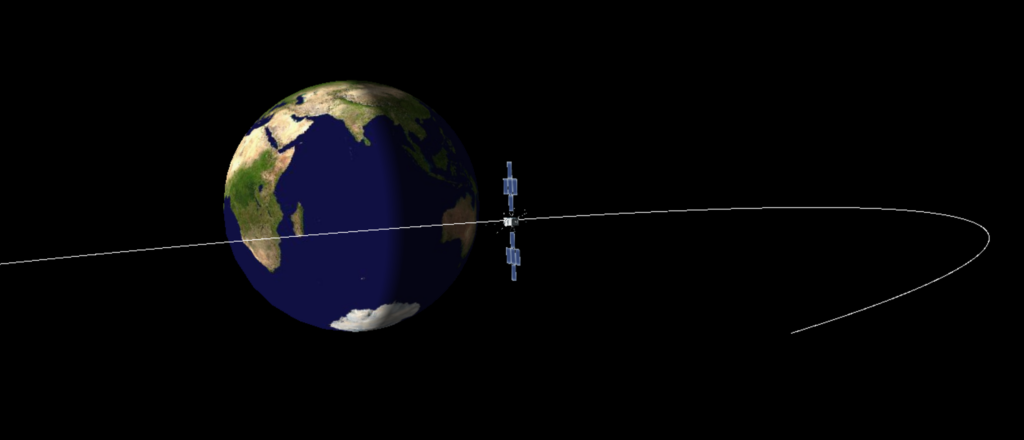
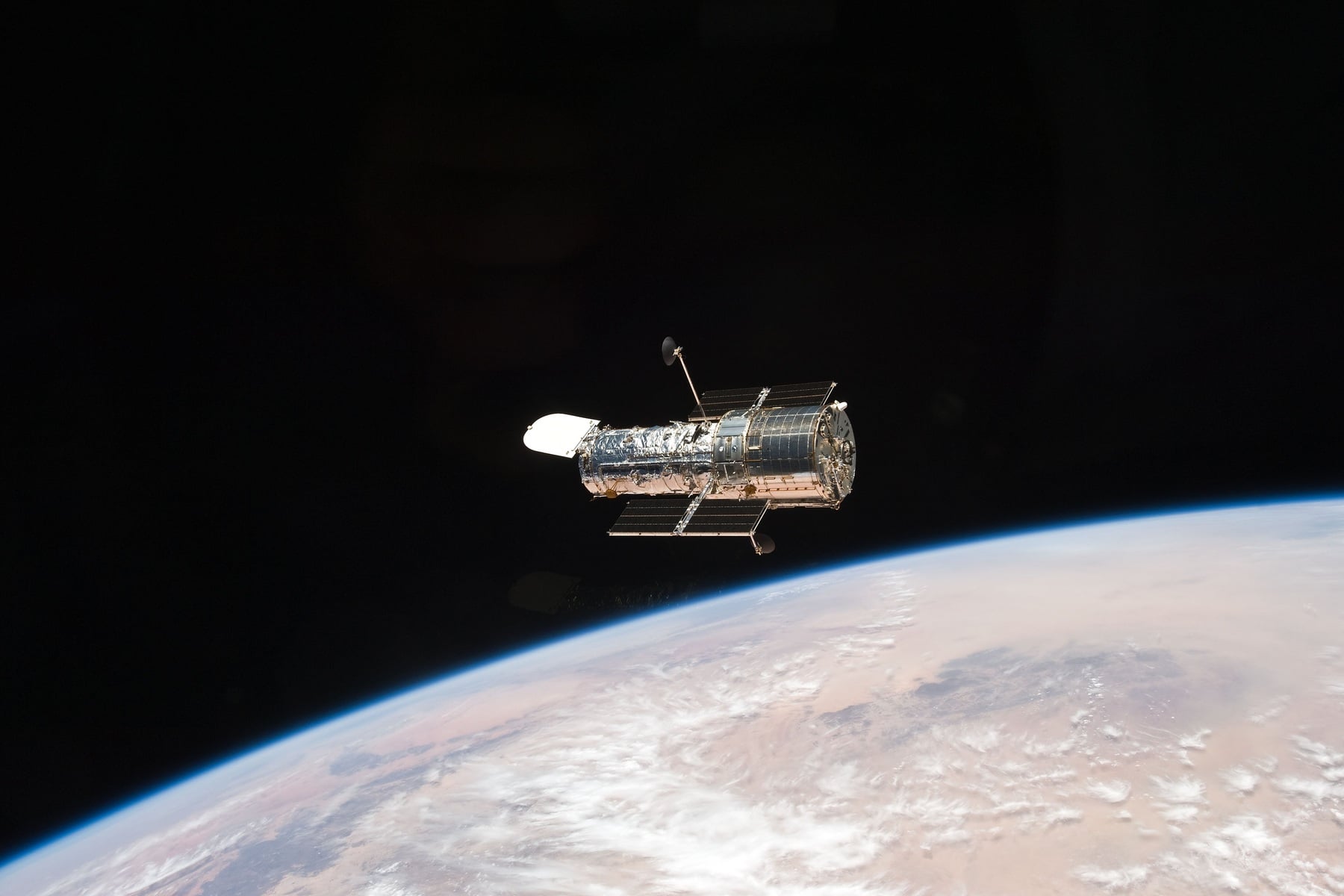
In 1984, NASA left a satellite carrying 57 experiments in orbit for a planned 10 months — repeated delays stretched the trip to 69 months before Columbia brought the entire laboratory home inside its cargo bay, its exposed surfaces weathered by years in space.

2026-09-09 — spacedaily.com


On 28 October 1971, a British Black Arrow rocket put Prospero into orbit from the Australian desert — Parliament had been told on 29 July that the programme would end after this flight, leaving the next rocket to become an unflown museum exhibit.

2026-09-09 — spacedaily.com


In 1996, astronauts paid out 19.7 kilometres of cable from the shuttle Columbia to test electricity generation in orbit — the system reached 3,500 volts before an electrical arc burned through the tether and sent the satellite drifting away from its ship.

2026-09-09 — spacedaily.com


In a Cold War communications experiment in 1963, the US Air Force released 480 million copper needles into orbit, each just 1.8 centimetres long — the tiny pieces spread into a ring around Earth so radio messages could bounce off an artificial sky made of metal.

2026-09-09 — spacedaily.com


The five deep-sea arrays of the Ocean Observatories Initiative had been streaming continuous readings from the Atlantic and Pacific since 2016, and in May 2026 the National Science Foundation said four would be pulled out of the water before reversing course on June 18

2026-09-09 — spacedaily.com

Execution: 0.25 Seconds. 58.6 mb used.