Konsume
Interval Day Week Month
Newswire Search Past 90 Days 8 stories 3 Publishers
Trending Today
Sort By: Snapshot
Buzz
Media Coverage
World View

Related Topics
Topic # Mentions Topic Reach
the17-
mars4-
everest4-
times4-
solar system3-
system3-
summit3-
mount everest3-
Prominent Journalists
Byline Articles Written Avg Reach
Space Daily Editorial Team 3 -
Deep Field 2 -
TOI Science Desk 1 -
Harry J. Kazianis 1 -
Lachlan Brown 1 -


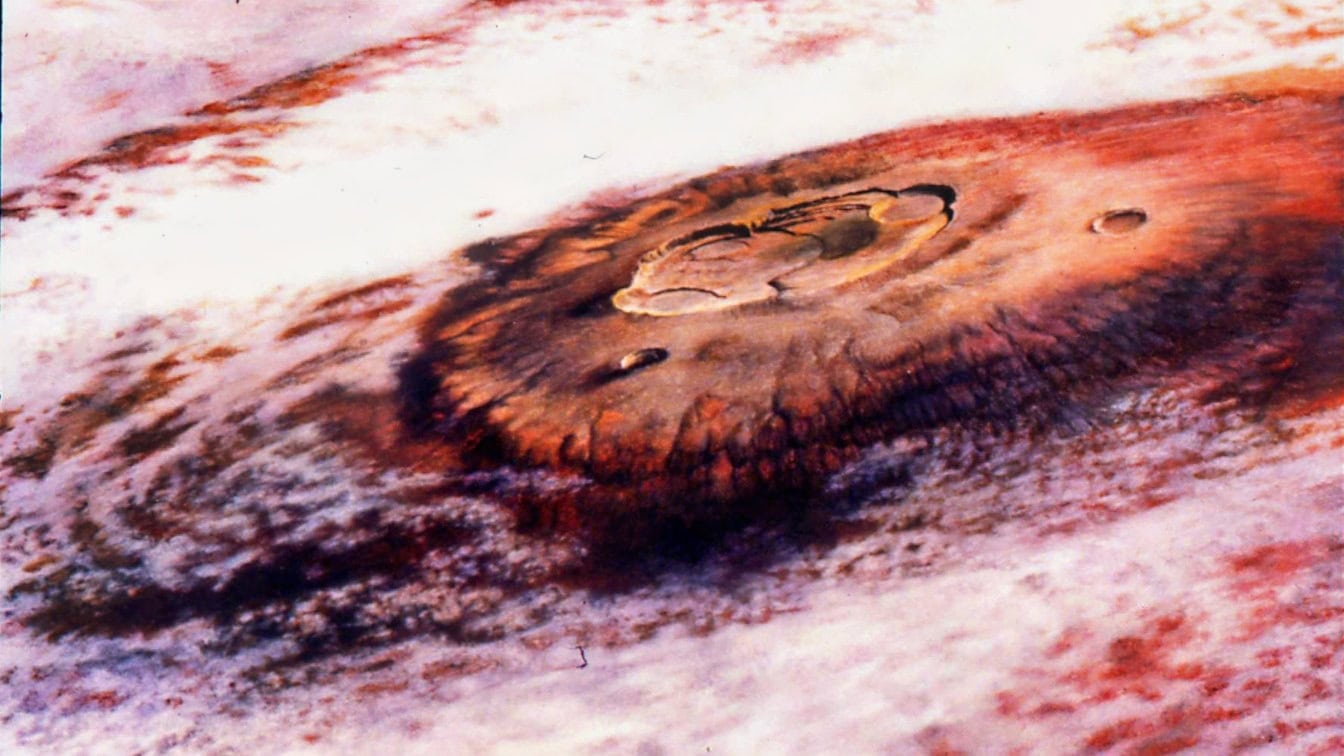
Olympus Mons grew so massive that parts of its lower flanks catastrophically collapsed, sending broken rock sliding hundreds of kilometres across the Martian plains—possibly lubricated when hot lava melted buried ice.

Deep Fieldspacedaily.com


Across Olympus Mons and three other giant Martian volcanoes, seasonal morning frost only about 0.01 millimetres thick disappears within hours of sunrise—yet collectively, approximately 150,000 tonnes of water, enough to fill 60 Olympic swimming pools, may cycle between the surface and atmosphere each cold-season day.

Deep Fieldspacedaily.com


Olympus Mons stands nearly three times the height of Everest, yet standing at its base you would not see a mountain at all, because its slopes rise so gently across roughly 600 kilometres that the summit sits well beyond the Martian horizon and the ground at your feet looks almost flat

Lachlan Brownspacedaily.com


At 70,000 Feet, Olympus Mons on Mars Stands Two and a Half Times Taller Than Mount Everest. It Is the Largest Volcano in the Solar System, and It May Not Be Extinct

Harry J. Kazianis19fortyfive.com


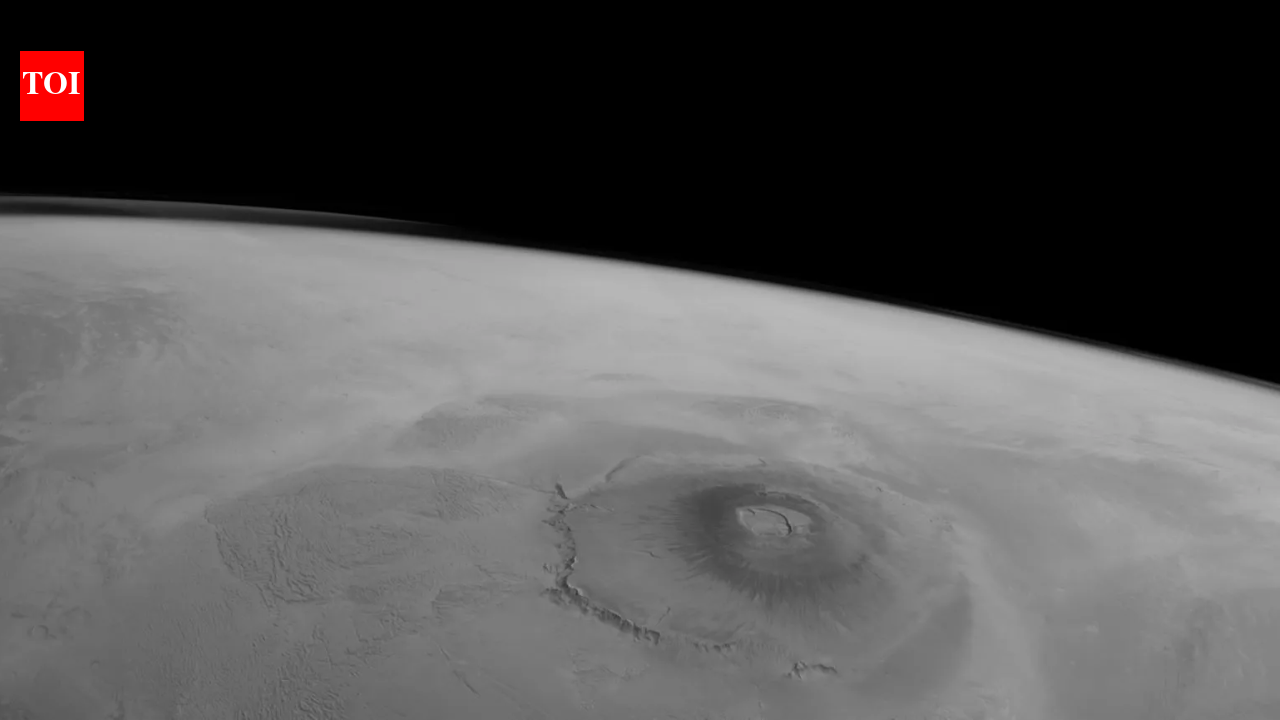
The largest known volcano in the solar system is on Mars, and it is so wide that if you stood on its summit, you might not realise you were on a volcano at all — Olympus Mons rises from a base roughly the size of New Mexico, with slopes so gentle they would barely feel like a mountain.

Space Daily Editorial Teamspacedaily.com


Olympus Mons: The giant Martian volcano nearly three times taller than Mount Everest

TOI Science Desktimesofindia.indiatimes.com


We think of Mount Everest as the ultimate mountain, but Olympus Mons on Mars rises nearly three times as high and spreads across a footprint roughly the size of Italy, making Earth’s tallest peak look almost local by comparison.

Space Daily Editorial Teamspacedaily.com


The tallest volcano in the solar system is so wide that from most places on its slopes, you would never see a dramatic summit rising ahead of you — Olympus Mons is broader than some countries, and its gentle flanks curve away with Mars long before the mountain looks like a mountain at all.

Space Daily Editorial Teamspacedaily.com

Execution: 1.26 Seconds. 61.1 mb used.